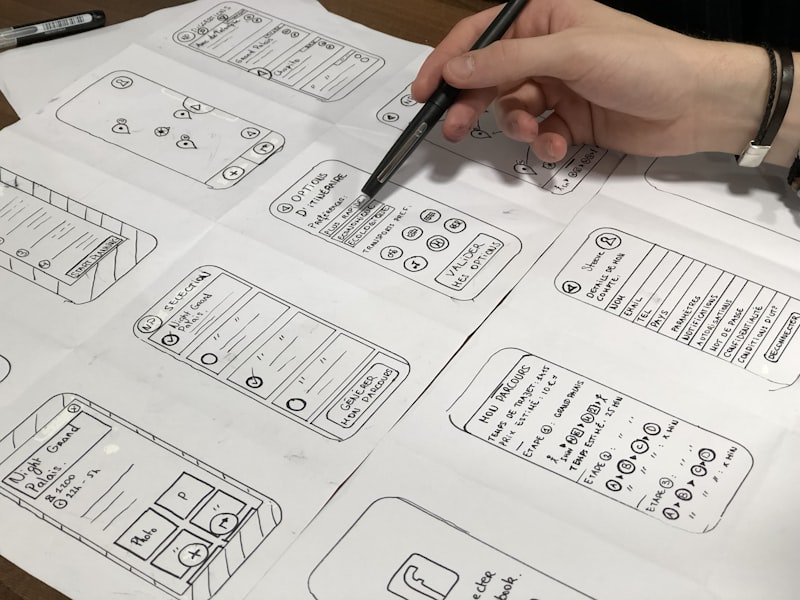
Research: The Foundation of Great UX
Design without research is guesswork. The best digital products — and the agencies that create them — are built on deep understanding of real user needs, behaviors, and frustrations. Design Agency Group conducts user research as part of their UX process, as seen in projects tagged with User Research and User Testing in their portfolio.
Qualitative vs. Quantitative Research
Qualitative — Answers "why" and "how":
- User interviews
- Contextual inquiry
- Focus groups
- Diary studies
- Ethnographic research
Quantitative — Answers "how many" and "how much":
- Analytics analysis
- Surveys
- A/B testing
- Usability benchmarking
- Eye tracking
Use both. Qualitative tells you what's wrong; quantitative tells you how widespread it is.
User Interviews
The most valuable research method:
- Recruit — 5-8 participants per user segment
- Prepare — Open-ended questions, avoid leading
- Listen — Talk 20% of the time, listen 80%
- Probe — "Tell me more about that" and "Why?"
- Observe — What people do matters more than what they say
Key questions to explore:
- What are you trying to accomplish when you visit the site?
- Walk me through the last time you tried to [key task]
- What was frustrating about that experience?
- How does this compare to other solutions you've tried?
Usability Testing
Watch real users attempt real tasks:
- Moderated — Researcher observes and can ask questions
- Unmoderated — Remote, recorded, participants work alone
- 5 users — Nielsen's research shows 5 users reveal 85% of usability issues
Task scenario example: "You've just arrived at the website for the first time. Find the pricing for the Business Care plan and tell me what you'd get."
Persona Development
Personas are fictional characters representing user segments:
- Based on real research, not assumptions
- Include goals, frustrations, behaviors, and context
- 3-5 personas per product (more creates confusion)
- Used to make design decisions: "Would Maria do this?"
Design Agency Group's Herbistry project demonstrates persona-driven design — understanding both the science-curious and wellness-seeking customer types required distinct design approaches.
Journey Mapping
Visualize the complete user experience:
- Every touchpoint from awareness to post-purchase
- Emotional highs and lows across the journey
- Opportunities and pain points
- Identifies where design can have the greatest impact
Card Sorting
Understand how users categorize information:
- Open — Users create their own categories
- Closed — Users sort into predefined categories
- Results inform information architecture and navigation
Optumio complements UX research by ensuring the live website that users research is fast and reliable — so real-world performance data reflects design decisions, not infrastructure issues.


Topics
Need Professional Design & Marketing Help?
Work with award-winning creative agencies that bring strategy, design, and digital expertise together.
Σχετικά Άρθρα
Όλα τα άρθρα
WordPress in 2026: The Complete Guide for Businesses
WordPress powers over 40% of the web. Learn how to choose themes, plugins, and build a high-performance WordPress site that ranks and converts.

E-Shop Development: Building Online Stores That Convert
A great e-shop combines beautiful design with conversion-focused architecture. Learn the platforms, design principles, and optimizations that drive online sales.

Responsive Web Design: Building for Every Screen in 2026
With mobile devices generating over 60% of web traffic, responsive design is not optional. Learn the principles, techniques, and testing approaches that ensure great experiences on every device.